Reference
Types of Whisky
The principal categories of whisky recognised across the world.
Blended Scotch Whisky
Blended Scotch is the most consumed style of whisky in the world. It combines malt whiskies from pot stills with grain whiskies from continuous column stills, and its history is the history of the great blending houses — Walker in Kilmarnock, Chivas in Aberdeen, Dewar in Perth.
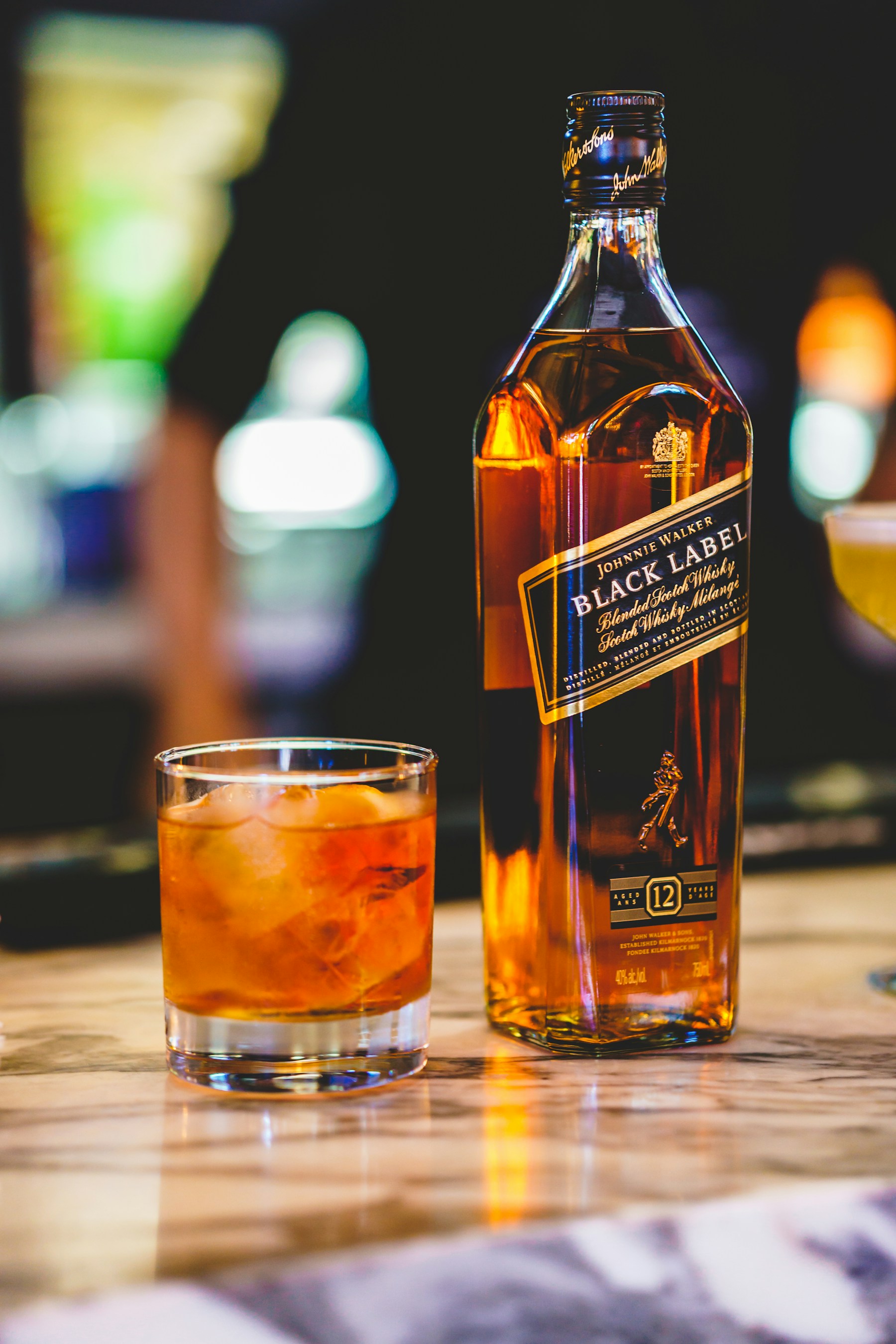
A blended Scotch such as Johnnie Walker Black Label may contain forty or more individual whiskies, drawn from across the six producing regions of Scotland and married together to a house style that must remain consistent year after year.
Single Malt Scotch
Single malt Scotch whisky is produced entirely from malted barley, distilled in copper pot stills at a single distillery, and matured in oak casks in Scotland for a minimum of three years.
The category was scarcely known outside Scotland until Glenfiddich began its international marketing in the 1960s. Today it stands as one of the most prestigious categories in world whisky.
Blended Malt Scotch
Blended malt Scotch combines single malts from two or more distilleries without any grain whisky. Formerly called 'vatted malt' or 'pure malt', the category was renamed under the Scotch Whisky Regulations 2009.
Monkey Shoulder, launched in 2005, is the modern flagship of the category — a blend of three Speyside malts from distilleries owned by William Grant & Sons.
Single Grain Scotch
Single grain Scotch whisky is produced at a single distillery, typically in a continuous column still, from a mash that may include maize, wheat or other cereals alongside malted barley.
Historically consumed almost entirely as a component of blends, single grain has in recent decades emerged as a small but distinctive category in its own right.
Single Pot Still Irish Whiskey
Single Pot Still Irish Whiskey is a category native to Ireland. It is made at a single distillery from a mash of both malted and unmalted barley, and distilled in traditional pot stills.
The style survives today at the Midleton Distillery, where it is produced by Irish Distillers and forms the heart of several premium Irish whiskeys.
Blended Irish Whiskey
Blended Irish whiskey combines pot still whiskey with grain whiskey, and is typically triple distilled in the Irish tradition. Jameson is the most widely distributed example.
The category was central to Ireland's Victorian golden age and remains the backbone of modern Irish whiskey by volume.
Japanese Whisky
Japanese whisky was founded in the early twentieth century by Masataka Taketsuru and Shinjiro Torii, who studied distillation in Scotland and returned to Japan to establish, respectively, Nikka and Suntory.
The category has since produced whiskies of great international standing, and Japan is now recognised as one of the world's principal whisky-producing nations.
American Bourbon
Bourbon whiskey, produced principally in Kentucky, is made from a mash of at least fifty-one per cent corn and matured in new charred American oak barrels. The fresh oak imparts the distinctive vanilla, caramel and toasted character of the style.
Straight bourbon must be aged for at least two years, though most premium bourbons are aged considerably longer.
Tennessee Whiskey
Tennessee whiskey is produced almost identically to bourbon, but with an additional step known as the Lincoln County Process: the new-make spirit is filtered slowly through a thick bed of maple charcoal before being filled into cask.
The process gives Tennessee whiskey — of which Jack Daniel's is by far the most widely known — a distinctively smooth character.
Canadian Whisky
Canadian whisky is traditionally a blended style, often made from a base of corn and flavouring whiskies rich in rye. It has been produced continuously in Canada since the late eighteenth century.
During American Prohibition, Canadian whisky occupied much of the North American market and its position has remained substantial ever since.